No Knead Feta Bread

on Nov 07, 2024, Updated Dec 11, 2025
This post may contain affiliate links. Please read our disclosure policy.
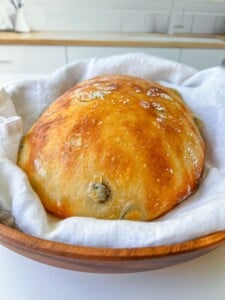
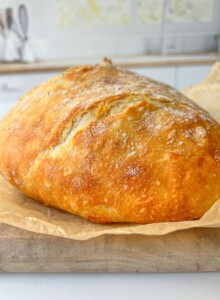
Hold onto your baking dishes…we’re about to break the internet, again! 💥 It brings me so much joy to see my amazing readers (you!) baking my No Knead Breads in kitchens around the world and making these recipes go VIRAL. Today I’m introducing a new variation on this “wonder bread,” and it’s a tasty one: No Knead Feta Bread. Salty, sophisticated, and deceptively easy to make; you will wow your friends when you bring a loaf to your next dinner party. 🤩 As with all of my no knead bread recipes, this one is for beginners and baking skeptics. Read the recipe carefully, and be prepared for the simplest, most delicious bread of your life.

Why You’ll Love No Knead Feta Bread
Bread and cheese are a match made in heaven. But cheese in bread? Now we’re really talking! 🙌 My No Knead Feta Bread is the stuff of dreams: a simple recipe, that even the most intimidated baker can take on, yielding a stunning, crispy exterior and a soft, tender, feta-studded interior. Bring this to your next gathering and be prepared for “oohs” and “aahs”! This impressive loaf takes less than 10 minutes of hands-on time; the rest is just letting the yeast and oven work its magic. 🪄
How to Prepare
✨ In a large bowl, combine the flour, salt, and the active dry yeast and then add warm water and stir until the dough comes together.


🧀 Next, add in the cubed feta cheese and dried oregano, gently folding it into the dough.
🕐 Now, cover the bowl with plastic wrap and let the dough rest for a minimum of 4 hours (or overnight) at room temperature. During this time, the dough will rise and develop flavor.


🥖 Shape the dough (don’t knead it!) into a round loaf on a floured surface.
🍽️ Carefully place the dough into an oven-safe dish lined with parchment paper.


🌡️ Cover it with the lid, place it in a cold oven, turn the oven on to 450°F (230°C), and bake for 30 minutes. After 30 minutes, remove the lid and bake for an additional 25-30 minutes until the bread is golden brown.
❄️ Remove the bread from the oven and let it cool (30 min) on a wire rack (or dig into it hot).


Nonna’s Tip 🫧
Make sure the yeast is not expired. You can always add the yeast to warm water and let it foam up. When it foams up, it’s active and ready to be used. If it doesn’t foam up, start this step again.

Variations and Substitutions for No Knead Feta Bread
Bulgarian No Knead Peasant Bread,” known as “Selski Hliab,” has deep-rooted traditions. But with a dash of creativity, you can tweak it to suit your preferences, from dietary choices to exciting flavor twists.
🍞 Flour: You can use whole wheat flour or a mixture of whole wheat and all-purpose flour for a heartier loaf.
🌿 Add Herbs and Spices: Enhance the flavor by adding herbs like rosemary, thyme, or spices such as garlic powder or onion powder to the dough.
🧀 Cheese and Garlic: Fold in grated cheese and minced garlic for a cheesy garlic bread twist: No Knead Cheddar Bread.
🍯 Sweet Variations: For a sweet twist, add honey, cinnamon, and raisins or dried fruit to the dough.
🌰 Seeds and Nuts: Sprinkle sesame seeds, poppy seeds, or chopped nuts (like walnuts or sunflower seeds) on top of the bread before baking for added texture and flavor.
🥖 Shape Variations: Experiment with different shapes – make rolls, baguettes, or even stuffed bread with your favorite fillings.
🌾 Gluten-Free Option: Use a gluten-free flour blend and ensure your yeast is gluten-free if you’re following a gluten-free diet.
🍞 Use Sourdough Starter: Use one cup of sourdough starter in place of the yeast. Be sure to let it rest and ferment for a minimum of 6 hours. 🥖
Similar Recipes

No Knead Olive Bread
6 hrs 5 mins

No Knead Gluten Free Bread
6 hrs 20 mins

No Knead Bread
6 hrs 5 mins

No Knead Cheddar Bread
6 hrs 10 mins

No Knead Focaccia
12 hrs 50 mins

No Knead Garlic Bread
4 hrs 10 mins
Best Served With
My No Knead Feta Bread pairs wonderfully with a variety of dishes, including soups and stews, cheese and butter boards, and more. Some of my favorite soups to enjoy with this bread:
- Pastina Soup
- Greek Lemon Soup
- The Best Lentil Soup
- Hidden Veggie Orzo Soup
- Healthy Cream of Broccoli Soup
- Healthiest Cream of Hidden Veggie Soup
- Hidden Veggie Meatball Soup
- Chicken Noodle Soup
Try it also with my favorite boards:
- Viral Butter Board With Goat Cheese
- Holiday Butter Board
- Holiday Charcuterie Board
- Holiday Cheese Board
Common Questions
strong Where can I find the baking dish that you use?
This is the mark background-color:#E5DEDC has-inline-color a https://geni.us/tmn-whiteovalcasserole Corning Ware Dish in my Amazon storefront that I used for this recipe. However, feel free to use any baking dish of choice.
strong Why is it essential for the water temperature to be between 100F and 110F (37C to 43C)?
Maintaining this water temperature range is crucial because it ensures that the yeast activates properly. Water that’s too hot or too cold can hinder yeast activation.
strong How can I measure the consistency of the dough when traditional measurements aren’t used?
In this traditional recipe, I encourage you to add water gradually until you achieve a very thick and sticky dough, following the “na oko” or “by eye” method.
strong What should I do if I’m unsure whether my yeast is still active?
To test the yeast’s activity, add it to the warm water separately. If it doesn’t foam up, you’ll need to start with new yeast. Foaming indicates that the yeast is active and is ready to be added to the flour and salt.
strong What do I do if the dough turns out too wet or too dry?
If the dough is too wet, you can sprinkle in a bit more flour to adjust. Conversely, if it’s too dry, add warm water a little at a time until you have a tacky dough.
strong Can I use any baking dish for this bread?
Yes, any oven-safe baking dish that can accommodate a loaf of bread will work. For example, a mark background-color:#E5DEDC has-inline-color a https://geni.us/tmn-whiteovalcasserole Corning Ware Dish or something similar will do the job. br
strong How do I use a Dutch oven to bake the bread?
Preheat your Dutch oven in a 450°F (230°C) oven with its lid on, shape the dough, place it inside, bake for 30 minutes with the lid on, then remove the lid and bake for an additional 15-20 minutes until golden brown.
strong Can I use a different type of yeast other than active dry yeast?
You certainly can. Although this recipe specifically calls for active dry yeast you can also try instant yeast as well.
strong Why is it important to scoop and level off the flour before adding it to the bowl?
This method ensures more precise measurements, helping you achieve the right consistency for the dough. br
strong Can I use aluminum foil instead of a dish lid for baking?
While I have not explicitly tested it, aluminum foil should work as a substitute for a dish lid.
strong Can I use whole-wheat flour instead of all-purpose flour?
Yes, you certainly can use whole-wheat flour.
strong Can I make a gluten-free version of this recipe?
Yes, you can use 1-1 gluten-free flour for this recipe, or you can make my strong a https://themodernnonna.com/no-knead-gluten-free-bread/ No-Knead Gluten-Free Bread. Please note that Caputo gluten-free flour is the only flour I have tested that has worked for me. br
how long should the dough rest?
The dough should rest for a minimum of 4 hours, but it’s common to leave it overnight and bake it the following morning, typically at room temperature away from drafts.
strong How does temperature affect the dough’s rising time?
In hotter climates, the dough may rise much faster, so I would advise placing it in a cooler room or limiting the rise to a maximum of 2 to 3 hours to prevent over-expansion. Once it triples in size (or fills the bowl to the top), it should be baked immediately.
strong Can I use this recipe in higher altitudes?
The recipe hasn’t been tested at higher altitudes, so adjustments may be necessary.
strong What should the consistency of the dough be like?
The dough should not be watery or dry; it should have a thick and sticky consistency.
what type of salt do you use?
I use a https://geni.us/tmn-redmond-salt mark background-color:#E5DEDC has-inline-color Redmond Real Salt , please note that depending on the salt you use, your dish may be less or more salty. Salt is always to taste. Always taste and adjust as you cook. br a https://themodernnonna.com/wp-content/uploads/2021/10/No-Knead-Bread-1-PNG.jpg
No Knead Feta Bread

Video
Equipment
Ingredients
- 3 cups all-purpose flour, plus more for dusting the counter and top of the bread
- 1 teaspoon salt
- ½ teaspoon active dry yeast, check the expiration
- 1 ¾ cups warm water, between 100F and 110F (37C to 43C)
- 150 grams feta cheese, cubed
- 1 teaspoon dried oregano, to taste
- additional flour for dusting the counter and the top of the bread
Instructions
- Note: The water must be between 100F and 110F degrees (37C to 43C ). If the water is too hot or too cold the yeast will not activate.
- In a large bowl, combine the flour, salt, and yeast. Mix with a whisk, wooden spoon, or with clean hands. Add the water and mix with a spatula until you have a sticky dough. Fold in the cubed feta cheese and sprinkle in the dried oregano.
- Cover the bowl with a clean kitchen towel (or plastic wrap) and let rest at room temperature for at least 4 hours or overnight. Place the bowl of dough away from drafty areas, such as in the microwave, cupboard, or in a cold oven.
- After the dough has tripled in size, uncover it, and flour the counter. Pour the dough out onto the counter and generously sprinkle the top with flour.
- You do not need to KNEAD the dough. You can simply move it around until you have a really nice and soft dough that is no longer sticky and is oval in shape.
- Place the loaf into any oven-safe dish lined with parchment paper. Place a lid on the dish, and place the dish in a cold oven (an oven that is NOT preheated).
- Turn the oven on to 450F (230C) once the bread is inside. Bake the bread with the lid on the dish for 30 minutes. After 30 minutes, carefully remove the hot lid from the dish and bake the bread for another 25 to 30 minutes. The bake time will depend on your oven, so keep an eye on it. Total bake time will be about 1 hour from the moment you place the bread into the cold oven.
- The bread is done once it’s light and golden all over. Let it cool for 5 to 10 minutes and dig in! Enjoy.
- To store leftover bread, let the bread cool completely, wrap it up in plastic wrap, beeswax wrap, or a clean kitchen towel, and store the bread on the counter. This bread is always best served warm the same day.
My Notes
Nutrition
Nutrition information is automatically calculated, so should only be used as an approximation.
Related Recipes


My family loved this!
Hi, Sneji!
Can I use seed flour, e.g. flax seed flour or punpkin seed flour for this bread?
Hi Monika, I recommend a 1-to-1 gluten free flour. I have never tried a seed flour.
You write: Why is it important to scoop and level off the flour before adding it to the bowl?
This method ensures more precise measurements, helping you achieve the right consistency for the dough.
Why don’t you just use a scale, always the same outcome, no guess work.
Hi Susi, I sometimes measure, sometimes weigh ingredients. I try to make my recipes accessible to everyone. At the bottom of the recipe list, you can click “metric” and all the ingredients switch to their measured weight. 💗
I used bread flour & my loaf turned out springy (not dense) & flat but the flavor is unparalleled! It rose 4 hours (but I’ll prob do minimum 6-8 next time) & also baked it in a preheated oven as I already had been baking all day & a cold oven wasn’t gonna happen. I’ll follow the baking instructions verbatim next time. The flavor is to die for & I always have these ingredients on hand!
Thanks for sharing RB! Love seeing a photo of your masterpiece! 😍
This might be my favorite of all your bread recipes. I love salty, feta, and bread.
Just wow!! This bread is the best!!! Thank you for this recipe
Thank YOU Sandy 🥰🥹💗
Hello! This looks delish! What size baking dish is recommended?
Hi Lois! Thank you! I use a 2.5-quart corningware dish with a lid: https://www.amazon.com/dp/B07HLCSVSJ?asc_item-id=amzn1.ideas.2MFPZVTYAJPE1&linkCode=sl1&tag=themodernnonn-20&linkId=269804394079849b839d094936a21c4d&language=en_US&ref_=as_li_ss_tl
This bread was a must-try for me. I loved the salty and creamy feta combined with the fluffiness of the bread. It was the perfect lunch.
I’ve always baked bread (no matter if plain or with additions) by placing the dough into preheated Dutch oven inside a preheated stove. What is the thinking behind your strategy of starting from cold?
(I have actually tried baking bread from cold a few times a long time ago and I remember the result being a much flatter loaf).
Thanks!
Hi Rob! Great question. A cold oven helps to ensure the dough doesn’t overheat and collapse, and it helps form a nice crunchy crust.
Can this bread be made with gluten free flour/ buckwheat flour or almond flour?
Hi Mary, I can say for certain that almond flour will not work. Gluten free flour will work! Check out my GF recipe: https://themodernnonna.com/no-knead-gluten-free-bread/
it was the best bread that I ever put in my mouth. 🍞