
No Knead Bread
If you’ve never baked bread before, this is the perfect place to start — it's simple, beginner-friendly, and rooted in family tradition.
Servings: 10 Slices
Ingredients
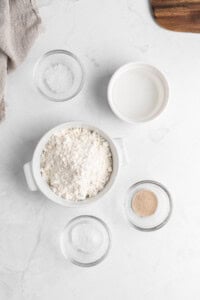
- 3 cups all purpose flour plus more for dusting the counter and top of the bread
- 1 teaspoon salt
- ½ teaspoon active dry yeast check the expiration; see notes below
- 1 ¾ cups warm water between 100 and 110 degrees Fahrenheit (37 to 43 degrees Celsius)
- additional flour for dusting the counter plus the top of the bread no kneading, dust the top and bottom well, gently shape and transfer
Instructions
- In a large mixing bowl, combine the flour, salt, and yeast. Mix with a whisk, wooden spoon, or with clean hands.
- Add the water and mix with a spatula until you have a sticky dough. Cover the bowl with a clean kitchen towel and let rest at room temperature for at least 5 hours or overnight. Place the bowl of dough away from drafty areas, such as in the microwave, cupboard, or in a cold oven.
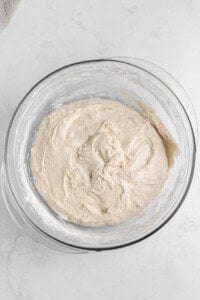
- Note: The water must be between 100 and 110 degrees Fahrenheit (37 to 43 degrees Celsius). If the water is too hot or too cold the yeast will not activate.
- After the dough has tripled in size, uncover it, and flour the counter. Pour the dough out onto the counter and generously sprinkle the top with flour.
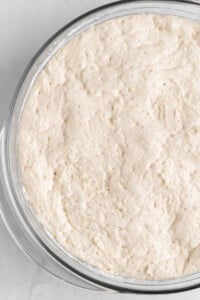
- Note: You do NOT need to knead the dough. You can simply move it around until you have a really nice and soft dough that is no longer sticky and is oval in shape. If the loaf sticks to your hands or the counter, sprinkle on a little more flour.
- Place the loaf into any oven-safe dish lined with parchment paper. Place a lid on the dish, and place the dish in a cold oven (an oven that is NOT preheated).
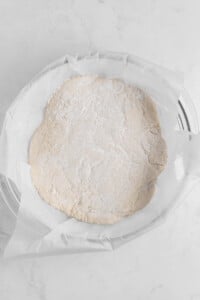
- Turn the oven on to 450F (230C) once the bread is inside. Bake the bread with the lid on the dish for 30 minutes. After 30 minutes, carefully remove the hot lid from the dish and bake the bread for another 25 to 30 minutes.
- Baking note: The bake time will depend on your oven, so keep an eye on it. Total bake time will be about 1 hour from the moment you place the bread into the cold oven.
- The bread is done once it’s light and golden all over. Let it cool for 5 to 10 minutes and enjoy!
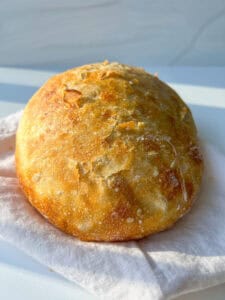
- Storage note: To store leftover bread, let it cool completely, wrap it up in plastic wrap, beeswax wrap, or a clean kitchen towel, and store the bread on the counter. This bread is always best served warm the same day.
Video
Notes
- Flour Variations: If you’d like a slightly chewier crumb, you can use bread flour instead. For a heartier loaf, substitute up to 50% whole wheat flour and add 1–2 tablespoons of extra water 💧 since whole wheat absorbs more moisture.
- Gluten-Free Option: For all my gluten-free besties, I developed this Gluten Free No Knead Bread with you in mind. Since bread relies on gluten to develop structure, the GF version won’t rise as high as the original and will have a slightly different taste and more density 🥖.
- Yeast Variations: This recipe uses active dry yeast. However, if you prefer instant yeast, you can substitute it in equal amounts and mix it directly into the flour.
- Sourdough Variation: Replace the yeast with ½ cup active sourdough starter and slightly reduce the flour and water to keep the dough balanced. The rise will take longer, and the flavor will be more complex and tangy.
- Flavor Add-Ins: Stir in rosemary and garlic 🧄 before the first rise, fold in chopped olives 🫒, make it extra cheesy, or add 2–3 tablespoons of seeds to the top before baking for extra texture. You can find all of my No Knead Bread recipes when you scroll up the post!
Nutrition
Calories: 137kcal | Carbohydrates: 29g | Protein: 4g | Fat: 0.4g | Saturated Fat: 0.1g | Polyunsaturated Fat: 0.2g | Monounsaturated Fat: 0.04g | Trans Fat: 0.2g | Cholesterol: 35mg | Sodium: 235mg | Potassium: 42mg | Fiber: 1g | Sugar: 0.1g | Vitamin A: 1IU | Vitamin C: 1mg | Calcium: 7mg | Iron: 2mg
